ERP Data Silos Cripple AI’s Potential
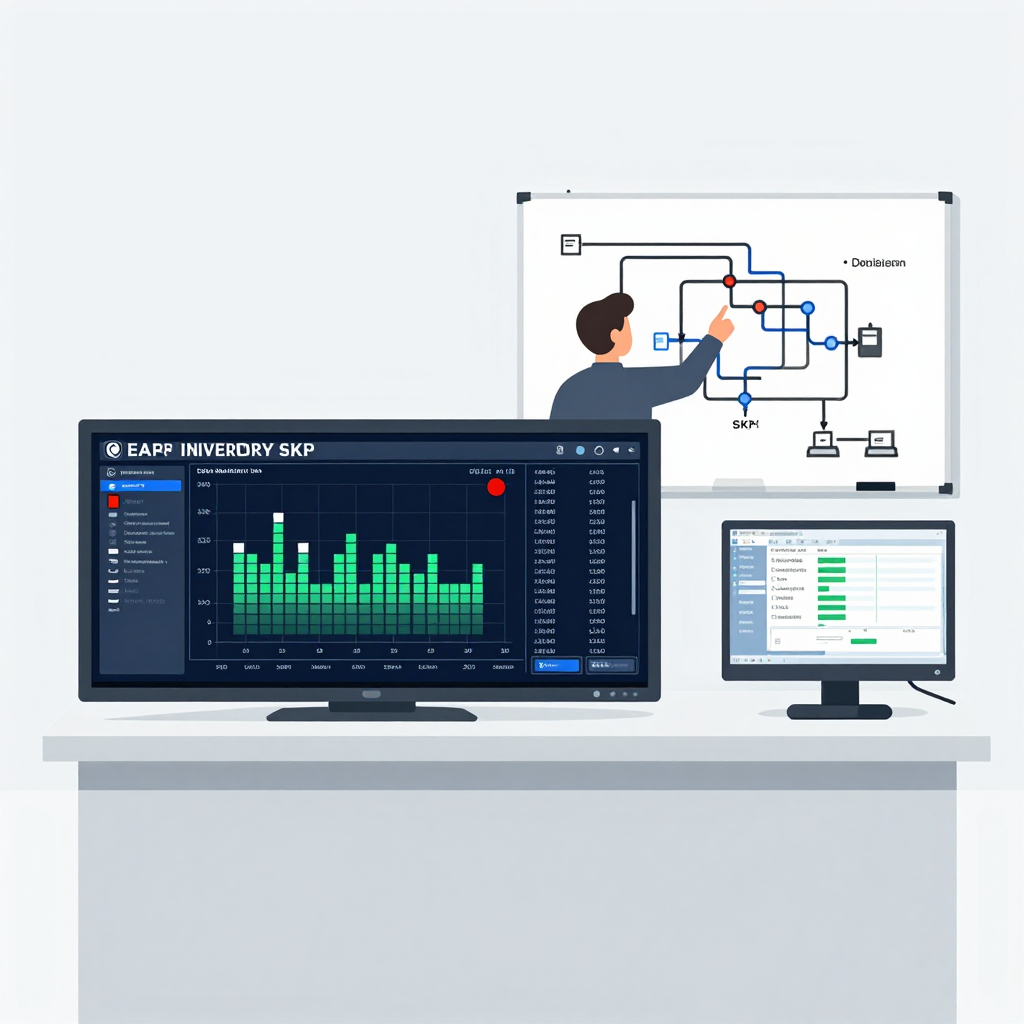
A global manufacturer’s AI initiative stalled not because the models were weak, but because its ERP system couldn’t surface real-time inventory data to the predictive analytics layer. The result? A $2.8M write-off when the AI recommended overproduction of a low-margin SKU—data that existed in SAP but wasn’t accessible to the AI layer. This isn’t an edge case. A 2023 Gartner survey found that 68% of enterprises cite ‘data integration gaps’ as the primary barrier to AI adoption in ERP environments.
The problem compounds when organizations bolt AI onto legacy ERP systems. Without a unified data model, AI agents waste cycles reconciling discrepancies between finance, supply chain, and HR systems. For example, a retail chain’s AI-driven demand forecasting tool produced wildly inconsistent outputs because its ERP’s master data management (MDM) system hadn’t updated product hierarchies in 18 months. The fix wasn’t better algorithms—it was fixing the data pipeline.
The Hidden Cost of Fragmented ERP Data
The financial impact isn’t just theoretical. When ERP data is siloed, AI initiatives devolve into data janitorial work—cleansing, normalizing, and reconciling records before any value is created. A mid-sized distributor estimated that 40% of its AI team’s time was spent manually resolving ERP data conflicts, delaying a critical supply chain optimization project by six months. The opportunity cost? Enough to stall a quarter’s strategic roadmap.
Worse, fragmented data erodes trust in AI outputs. A 2024 McKinsey analysis of 500 enterprises found that organizations with poor ERP data quality were 3.2x more likely to reject AI recommendations, even when those recommendations were statistically sound. The mechanism is clear: if the ERP’s ‘single source of truth’ is riddled with duplicates, stale records, or misaligned hierarchies, no AI model—no matter how advanced—can compensate. The result is a cycle of pilot purgatory, where AI projects are greenlit, fail to scale, and are quietly shelved.
Embedded AI Demands a Unified ERP Data Fabric
The solution isn’t to rip out your ERP or hire a data science army. It’s to embed AI where your data already lives: in your ERP. Modern ERP platforms like SAP S/4HANA and Oracle Fusion now support ‘embedded AI’—predictive analytics, anomaly detection, and process automation that run natively within the ERP’s data model. For example, SAP’s AI Core services provide pre-built models for demand forecasting, cash flow prediction, and procurement risk scoring, all trained on your ERP’s transactional data.
Bear Systems takes this further by integrating these AI capabilities with your existing ERP’s data fabric. Our approach involves three layers: (1) a real-time data pipeline that unifies master data (customers, products, suppliers) across ERP modules; (2) a semantic layer that maps ERP fields to business context (e.g., linking ‘customer tier’ in CRM to ‘credit risk’ in finance); and (3) an AI orchestration engine that deploys models directly into ERP workflows—no middleware required. The result is AI that ‘just works’ because it’s operating on a single, clean dataset.
ROI: From Data Chaos to Predictive Operations
Consider a concrete scenario. A $1.2B manufacturing client deployed Bear Systems’ embedded AI layer on top of its SAP S/4HANA system. The AI models—trained on unified ERP data—reduced excess inventory by 18% in the first year while cutting stockouts by 12%. The financial impact: $4.7M in working capital savings and $1.9M in avoided expedited shipping costs. Critically, the AI’s recommendations were adopted 89% of the time, compared to 45% pre-implementation, because the ERP’s data was now trustworthy.
The ROI isn’t just operational. Embedded AI in ERP reduces the need for custom integrations and bolt-on analytics tools, cutting IT overhead by up to 30%. A Forrester study of similar deployments found that organizations recouped their investment in embedded AI within 14 months, primarily through reduced data reconciliation labor and faster time-to-insight. The tradeoff? Upfront investment in data governance and ERP modernization—but the alternative is perpetually playing catch-up with competitors who’ve already solved their data foundation.
What Good Looks Like: AI That Scales with Your ERP
In a well-executed embedded AI deployment, your ERP becomes the nerve center of your operations. Demand forecasts update hourly, not weekly, because the AI pulls real-time sales and inventory data directly from SAP. Procurement teams receive automated risk alerts when supplier lead times deviate from contract terms—data that’s already in your ERP but previously required manual spreadsheet reconciliation. Even HR benefits: AI-driven attrition risk scoring uses payroll and performance data from your ERP to flag flight risks before they escalate.
The end state isn’t a futuristic ‘lights-out’ factory or a fully autonomous supply chain. It’s an ERP that’s intelligent enough to surface the right data at the right time, without requiring armies of data engineers to clean it first. Your AI agents stop being experimental projects and start being trusted advisors. And your teams stop asking, ‘Why is the AI wrong?’—because the data it’s trained on is finally correct.
Your Next Step: Audit Your ERP’s AI Readiness
The first step isn’t to hire a data scientist or buy a new AI tool. It’s to ask: *Is your ERP’s data fit for AI?* Start with three questions: (1) Are your master data records (customers, products, suppliers) clean, deduplicated, and aligned across ERP modules? (2) Can your ERP surface real-time transactional data to an AI model without manual extraction? (3) Do your teams trust the ERP’s outputs enough to act on AI recommendations?
If the answer to any of these is ‘no,’ you’re not ready for embedded AI—you’re ready for a data foundation audit. Bear Systems offers a 30-day assessment that maps your ERP’s data gaps, quantifies the cost of inaction, and outlines a phased roadmap to embed AI where it belongs: in your ERP. The alternative is to keep watching competitors pull ahead while your AI projects stall in pilot purgatory. The choice isn’t whether to adopt AI—it’s whether to adopt it on a foundation that actually works.
Sources
Source: RealTimeNews — The real challenge of AI isn’t the technology: SAP partners