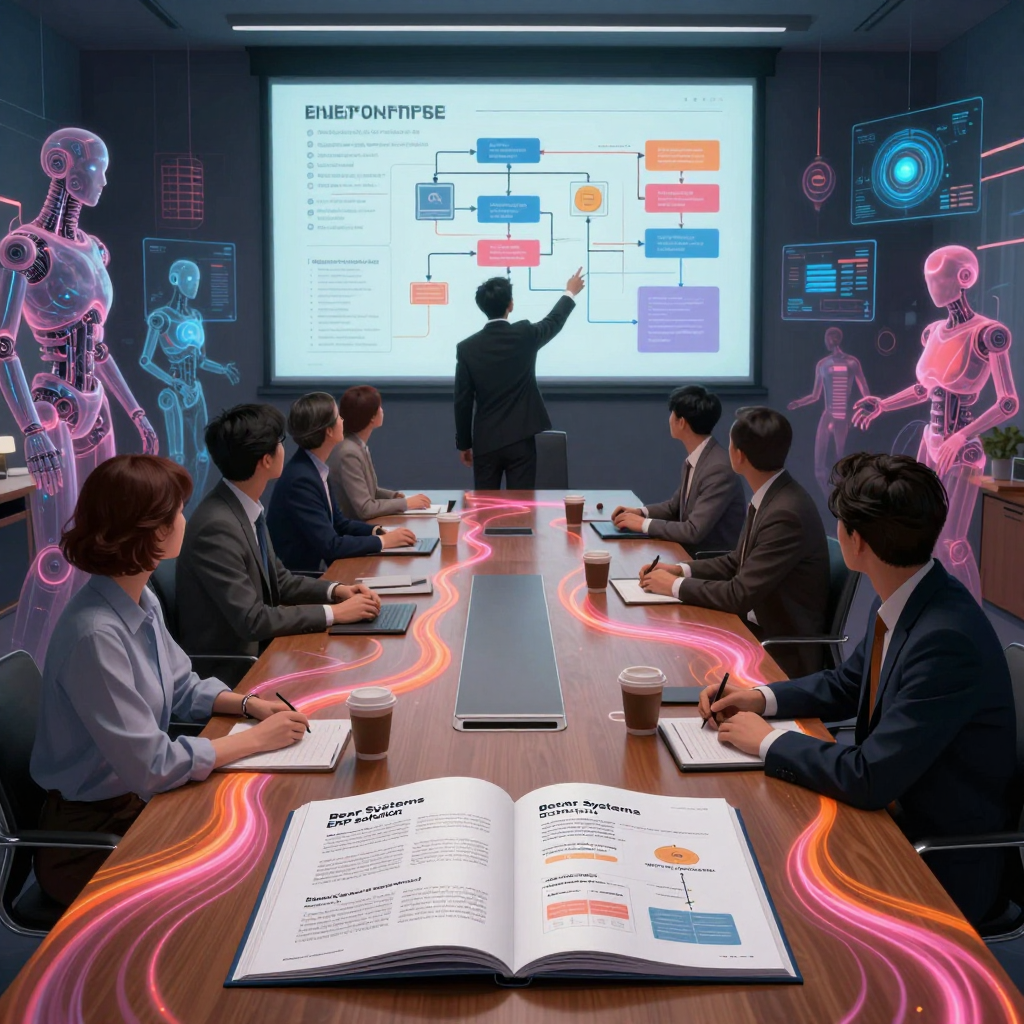
Operational Challenges Ahead
A recent Harvard Business Review article highlights that after years of experimentation, enterprises have now reached an inflection point in artificial intelligence (AI) adoption, necessitating a shift in leadership mindset to fully leverage AI's potential.
This inflection point is marked by the need to integrate AI into core business operations, moving beyond experimental projects. However, this integration poses significant operational challenges, particularly in managing complex data flows, ensuring algorithmic transparency, and adapting organizational structures to support AI-driven decision-making.
Quantifying the Business Cost
The inability to effectively adapt to AI-powered operations can lead to stalled innovation pipelines and inefficiencies in supply chain management, enough to stall a quarter's roadmap. Moreover, the lack of transparency in AI decision-making can result in compliance issues, damaging both the bottom line and the company's reputation.
The integration of AI into core operations requires a holistic approach, considering both the technological and organizational aspects. This includes investing in Enterprise Resource Planning (ERP) systems that can handle the complexities of AI-driven data and process automation.
Bear Systems' ERP Solution
Bear Systems offers a comprehensive ERP solution designed to help enterprises adapt to AI-powered operations. Our system includes specific capabilities such as AI-agentic automation, which enables the automation of complex business processes, and advanced data analytics, providing insights into operational efficiency and areas for improvement.
Furthermore, our ERP solution is built on the principles of flexibility and scalability, allowing it to integrate seamlessly with existing systems and adapt to the evolving needs of the enterprise as it embraces AI more deeply.
Strategic Value and ROI
The strategic value of adapting to AI-powered operations lies in its potential to significantly enhance operational efficiency, reduce costs, and unlock new revenue streams through innovation. By integrating AI into core operations, enterprises can automate routine tasks, freeing up resources for more strategic and creative work.
A scenario illustrating the potential ROI of such an adaptation could involve a company reducing its supply chain management costs by 15% through the use of predictive analytics and AI-driven logistics optimization, leading to a meaningful share of increased profitability.
The End State
After successfully adapting to AI-powered operations, an enterprise can expect to see a significant transformation in its ability to innovate, respond to market changes, and operate efficiently. The end state is characterized by a seamless integration of AI into all aspects of the business, from supply chain management to customer service.
In this state, AI is not just a tool but a fundamental component of the enterprise's operational fabric, enabling data-driven decision-making, automating complex processes, and fostering a culture of continuous innovation and improvement.
Taking the First Step
To begin this journey, enterprises should start by auditing their current workflows and systems to identify areas where AI can be most effectively integrated. This involves a thorough analysis of current operational inefficiencies, data management practices, and organizational structures.
By partnering with Bear Systems, enterprises can gain access to the expertise and technology needed to navigate this transformation successfully. We invite you to audit your workflows with us, taking the first step towards unlocking the full potential of AI in your operations.
Sources
Source: RealTimeNews — Why the AI-Powered Enterprise Urgently Needs a New Leadershi
Why the AI-Powered Enterprise Urgently Needs a New Leadership Mindset